
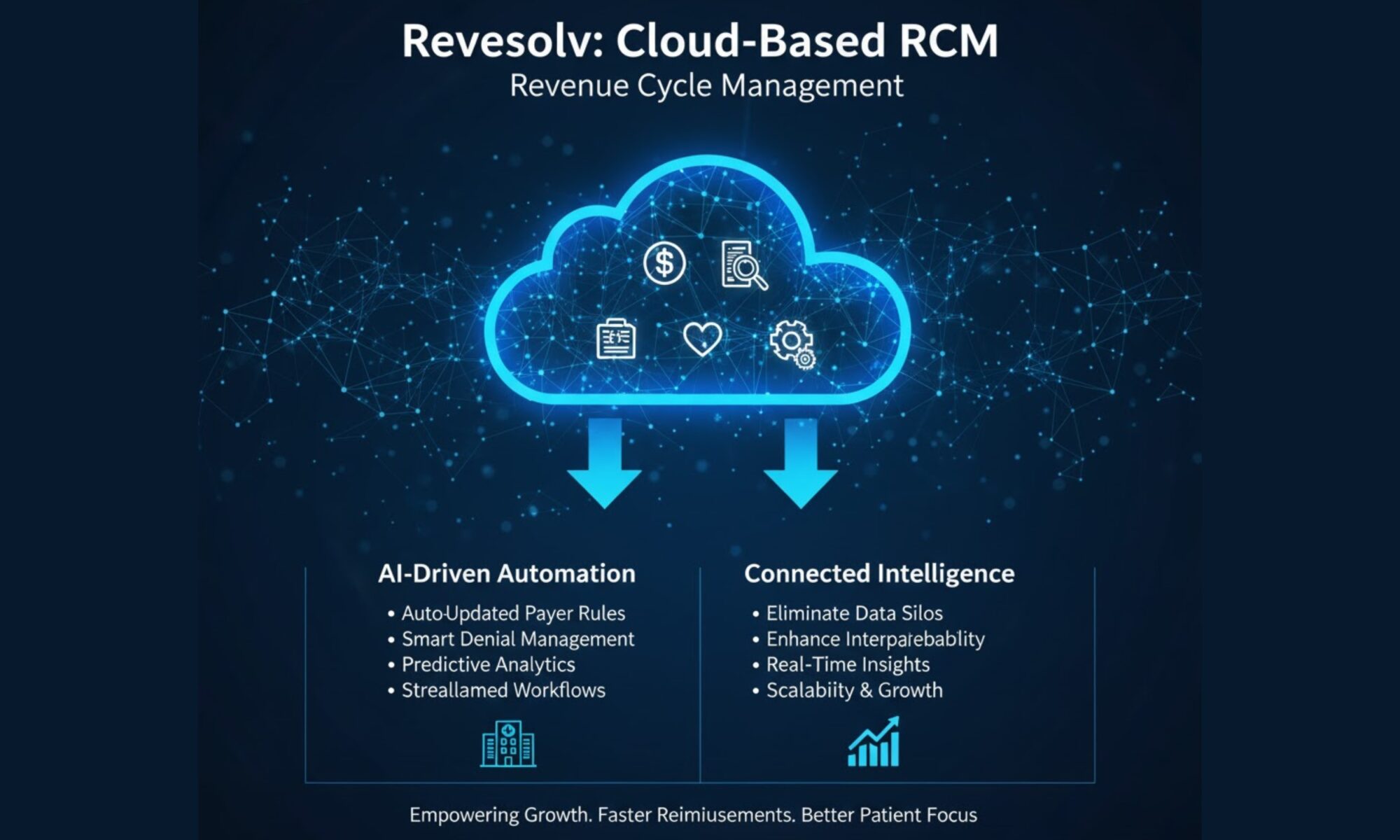
Defining Cloud-Based RCM Systems and Why They Matter in Healthcare Operations

The term “cloud technology” has come a long way. What once referred to online photo storage or shared business folders has now evolved into something much more powerful – a foundation for innovation across industries, especially healthcare.

In healthcare operations, cloud-based solutions are reshaping how data, workflows, and revenue cycles function. For Revenue Cycle Management (RCM), the cloud isn’t just a storage space – it’s the backbone of agility, accuracy, and scalability.

What is Cloud Computing?

Simply put, cloud computing means accessing and managing data, software, or services through the internet rather than from local servers or physical hardware.

Information and applications are stored online – “in the cloud” – and can be accessed securely by authorized users anytime, anywhere. Security protocols, encryption, and controlled access ensure that data remains safe, even as it flows seamlessly between users and systems.

Cloud computing stands apart from conventional software by offering key advantages:

  • On-demand self-service: Users can access tools and data anytime, without needing manual setup or maintenance.

  • Agility: Updates and improvements roll out instantly across the network.

  • Broad accessibility: Teams can log in from any location using standardized devices.

  • Resource pooling: Multiple users can share and use the same infrastructure efficiently.

  • Rapid scalability: The system adjusts to workload spikes or user growth without downtime.

These traits make cloud computing an ideal fit for healthcare organizations that need fast, reliable, and secure access to data – especially in the realm of revenue cycle management.

What is a Cloud-Based RCM System?

A cloud-based RCM system centralizes all financial, administrative, and billing data in a secure online environment. Unlike traditional RCM software limited by local installations, cloud-based systems connect every part of the revenue cycle – from patient registration to final reimbursement – on a single platform.

This connectivity means updates, automations, and insights are shared across all users in real time. Claims processing, denial management, and payer updates no longer depend on manual interventions or individual servers – they’re managed centrally and intelligently.

Why Cloud-Based RCM Matters

Revenue cycle management depends on accuracy, speed, and adaptability. Cloud-based systems make these possible by:

  • Eliminating silos: Teams across billing, coding, and administration access the same updated data.

  • Enhancing interoperability: Integration with EHRs, clearinghouses, and payers happens smoothly.

  • Reducing IT overhead: There’s no need for heavy infrastructure or manual software installations.

  • Enabling real-time insights: Dashboards and analytics are always current, giving teams visibility into claims, payments, and denials as they happen.

As healthcare shifts toward automation and AI, the cloud offers the agility needed to adapt – ensuring data-driven decision-making and sustainable financial performance.

AI-Driven, Cloud-Native Revenue Cycle Automation

AI is the new catalyst redefining what’s possible in RCM. When combined with a cloud-native architecture, it enables real-time learning across the network – every clean claim, payer update, or denial resolution strengthens the system for everyone connected.

At Revesolv, our cloud-based RCM platform integrates automation and intelligence at every stage of the revenue cycle:

  • Auto-updated payer rules: Every change from payers is reflected instantly across clients.

  • Smart denial management: AI identifies recurring patterns, helping prevent rework and reduce denial rates.

  • Predictive analytics: Algorithms forecast claim outcomes and reimbursement trends before submission.

  • Streamlined workflows: Teams can collaborate in real time, with complete visibility into every claim status.

  • Continuous improvement: The platform learns from each transaction, creating a stronger and more efficient ecosystem over time.

The result? Reduced manual intervention, faster reimbursements, and greater control over financial performance.


Empowering Growth Through Connected Intelligence

Cloud-based RCM isn’t just about technology – it’s about scalability. As practices grow or regulations evolve, cloud-native systems adapt without disruption.

By combining AI-driven intelligence with a centralized, secure, and connected platform, Revesolv empowers healthcare providers and billing teams to focus less on paperwork and more on patients.

The future of RCM is one where automation, transparency, and performance go hand in hand – and with a cloud-based foundation, that future is already here.


 

Healthcare Revenue Cycle Analytics: Essential KPIs to Track

What is Healthcare Data Analytics?

The healthcare revenue cycle covers every step from scheduling a patient’s appointment to settling their final bill. Each point in this process presents an opportunity for delays, errors, or lost revenue. To keep operations smooth and financially sustainable, healthcare organizations must track the right Key Performance Indicators (KPIs) – and use intelligent tools to make data-driven decisions.

How Can Revenue Analytics Help Your Hospital?

Revenue cycle analytics gives healthcare providers a comprehensive view of their financial health. It helps identify inefficiencies, improve collections, reduce denials, and forecast future cash flow. When powered by modern analytics platforms like REVESOLV, hospitals can stay financially resilient in a competitive, ever-changing healthcare landscape.

Identifying Operational Bottlenecks

Analytics helps expose workflow inefficiencies, such as claims that stall due to documentation or coding errors. By identifying where delays happen, teams can streamline operations, reduce friction, and lower staff turnover due to repetitive rework.

Enhancing Collections and Reducing Denials

Claim denials and unpaid balances are major sources of lost revenue. With revenue cycle analytics, hospitals can:

  • Analyze denial patterns

  • Address root causes

  • Train staff for higher accuracy in claim submissions

Patient payment behaviors can also be evaluated, allowing financial counselors to offer proactive support such as payment plans or financial assistance.

Forecasting Revenue and Patient Volume

Predictive analytics tools empower hospitals to forecast both patient traffic and revenue streams. These insights guide staffing, resource planning, and budgeting – allowing facilities to scale operations efficiently while maintaining quality of care.

Benchmarking Performance Against Industry Standards

Comparing internal KPIs to industry averages helps hospitals assess how they stack up against peers. Metrics like denial rates, reimbursement turnaround, and cost-to-collect offer benchmarks for performance improvement and competitive positioning.

Supporting Price Transparency and Patient Engagement

Today’s patients demand transparency. Revenue analytics can uncover pricing trends and payment behaviors, helping hospitals create clear, accurate billing. This transparency improves patient trust, satisfaction, and timely payments.

Key Categories of Revenue Cycle Analytics and Their KPIs

1. Contract and Payer Analytics

Understanding payer behavior is critical. Hospitals can analyze the efficiency and performance of contracts to renegotiate better terms and reduce delays.

Key Metrics:

  • Payer Mix Analysis: Identifies revenue distribution across payers to highlight which are most or least profitable.

  • Denial Rate by Payer: Tracks the percentage of denied claims by each payer, exposing problematic trends.

  • Payer Reimbursement Timeliness: Measures average time from claim submission to reimbursement, flagging delays.

2. Predictive Analytics

Predictive tools use AI and historical data to foresee issues before they arise, enabling proactive corrections.

Key Metrics:

  • Denial Probability Modeling: Predicts the chance of a claim denial to allow preemptive action.

  • Days in A/R Projection: Forecasts how long it will take for accounts receivable to be paid.

  • Reimbursement Increase Rate: Measures improvements from uncovering hidden coverage or underpayments.

3. Descriptive Analytics

These metrics provide a snapshot of past and current performance. They serve as the foundation for strategy development and improvement.

Key Metrics:

  • First-Pass Acceptance Rate (FPAR): The percentage of claims accepted on the first try – an indicator of billing accuracy.

  • Clean Claims Rate: Measures how many claims are submitted without errors, reducing denial risk.

  • Uncompensated Care Rate: Tracks the percentage of services delivered without payment – highlighting potential financial risks.

4. Prescriptive Analytics

While descriptive and predictive analytics highlight what happened or could happen, prescriptive analytics offers recommendations on what to do next.

Key Metrics:

  • Time to Reimbursement (TTR): Measures how long it takes to get paid after submitting a claim.

  • Cost-to-Collect Ratio: The cost of collecting payments as a percentage of total revenue – indicating operational efficiency.

  • Audit Resolution Time: Tracks how long it takes to resolve audits – minimizing disruption and penalties.


Boosting Revenue with Insurance Discovery and Revenue Recovery

Improving revenue capture isn’t just about billing faster—it’s about making sure every dollar is accounted for. REVESOLV’s suite of revenue recovery tools helps hospitals uncover hidden coverage, reduce uncompensated care, and accelerate reimbursements.

Insurance Discovery

Many patients are unaware or unable to communicate their insurance details during intake. REVESOLV’s automated tools scan for active coverage and verify eligibility in real time. This reduces missed opportunities and ensures claims are routed correctly.

Financial Assistance Automation

Through advanced eligibility screening, REVESOLV helps identify patients who qualify for Medicaid or other financial aid programs. Automated workflows reduce manual errors and ensure timely enrollment and compliance.

Medicare Underpayment Review

Hospitals often leave money on the table due to overlooked discrepancies. REVESOLV audits Medicare claims for underpayments and coding errors, recovering lost revenue and ensuring regulatory compliance.

Improving Claims Accuracy with Integrated Tools

Accurate claims submission is a cornerstone of efficient revenue cycle management. REVESOLV’s integrated clearinghouse and document management tools ensure claims are clean, accurate, and promptly submitted.

Clearinghouse Integration

REVESOLV streamlines electronic data interchange (EDI) between providers and payers. Real-time claim tracking, error detection, and automated corrections increase first-pass acceptance rates and reduce rework.

Electronic Documentation Submission (eDocs)

REVESOLV enables direct submission of required documentation to Medicare and other payers, eliminating paper delays. Secure portals simplify audit responses and keep hospitals compliant while improving communication with payers.

Enhancing Efficiency with Audit & Denial Management Tools

Hospitals face growing pressure from audits and payer scrutiny. REVESOLV’s audit and denial management solutions provide visibility, control, and peace of mind.

Audit & Denial Tracker

This tool simplifies compliance by offering case management, payer correspondence tracking, and centralized document handling. Hospitals can track appeal progress, flag high-risk claims, and reduce audit response time.

Advanced Reporting and Dashboards

Customizable reports and visual dashboards turn complex data into actionable insights. From denial trends to reimbursement delays, REVESOLV’s reporting suite empowers decision-makers to fix bottlenecks and improve outcomes.

Final Thoughts

In today’s evolving healthcare economy, a data-driven revenue cycle is no longer optional—it’s essential. With tools and insights from REVESOLV, healthcare organizations can:

  • Reduce denials

  • Increase collections

  • Shorten reimbursement times

  • Improve patient engagement

  • Achieve long-term financial stability

Ready to transform your revenue cycle analytics?
Discover how REVESOLV’s end-to-end solutions can help you take control of your revenue cycle and improve financial outcomes.

The True Cost of Patient Registration Errors and How to Prevent Them

In healthcare, patient registration is the first and most critical step in the care journey. Errors here can trigger denied claims, lost revenue, and compliance risks. Beyond administration, registration mistakes affect operations, finances, and patient trust. Ensuring accuracy from the start safeguards both patients and providers.

This blog explores the real cost of patient registration errors, their common causes, and how healthcare organizations can prevent them.

The Financial and Operational Impact of Registration Errors

Errors during patient intake, such as incorrect insurance information or incomplete demographic data, can directly lead to denied claims. Many of these claims are never resubmitted, resulting in permanent revenue loss. Industry data shows that most denied claims originate from mistakes made during registration.

Beyond financial loss, registration errors burden administrative staff. Instead of focusing on higher-value tasks, team members spend time chasing missing details, updating records, and communicating with payers – driving up labor costs and slowing the revenue cycle.

Patients are affected as well. Incorrect bills, delayed appointments, or unexpected coverage issues caused by registration mistakes can quickly erode trust. Repeat errors may push patients to seek care elsewhere.

Compliance is another major concern. Duplicate records or mismatched patient identifiers can expose healthcare organizations to privacy breaches and regulatory scrutiny. A seemingly minor data-entry error can quickly escalate into a serious compliance issue.

Common Causes of Patient Registration Errors

Registration errors often stem from systemic issues:

  • Manual Data Entry: Typos, omissions, and copy-paste errors are common when staff are under time pressure.

  • Inconsistent Workflows: Variations in registration procedures across departments lead to non-standardized data.

  • Unverified Insurance Coverage: Failing to confirm eligibility in real time can result in services provided without coverage.

  • Undertrained or Unsupported Staff: Lack of proper training or guidance increases the likelihood of errors.

How to Prevent Registration Errors

Improving registration accuracy starts with strengthening how patient data is collected, validated, and managed. Key strategies include:

  1. Automate Verification: Use tools that confirm insurance coverage and patient information at the point of entry to catch issues early.

  2. Standardize Workflows: Implement consistent procedures across departments to reduce variation and errors.

  3. Invest in Training: Provide ongoing education and performance feedback to frontline staff to reinforce best practices.

  4. Monitor and Act: Use reporting to identify trends in registration errors and address breakdowns before they escalate.

How Revesolv Can Help

Revesolv provides technology-driven solutions and expert support to minimize patient registration errors. We verify eligibility and benefits upfront, manage duplicate records, and detect inaccuracies before they impact billing. Real-time claim validation and scrubbing reduce the risk of denials. Additionally, our targeted training programs and performance monitoring equip staff with the skills and knowledge needed to maintain accuracy and efficiency throughout the registration process.

The Bottom Line

Patient registration errors may seem like minor administrative mistakes, but their operational and financial consequences are significant. With the right technology, standardized workflows, and well-trained staff, these errors are highly preventable. By focusing on front-end accuracy, healthcare organizations can protect revenue, stay compliant, and deliver a smoother, more trustworthy patient experience from the very first interaction.

The Critical Role of Accurate Patient Registration in Healthcare Success 

When we think of healthcare excellence, clinical expertise and patient care often take the spotlight. But behind every successful care delivery lies a vital, often overlooked component: patient registration. This initial step forms the foundation of every healthcare interaction – and when errors creep in here, the effects ripple far beyond the front desk.

At Revesolv, we recognize that registration is not just the beginning of the patient journey – it’s a critical control point that shapes financial health, operational efficiency, and patient satisfaction.


More Than Just a Form – It’s a Gatekeeper for Everything That Follows 

From a surface view, registration might seem like a basic data collection activity. But it’s much more than that. This is where patient identities are verified, insurance coverage is validated, and records are matched to ensure continuity of care.

Here’s what happens when registration errors occur:

  • Billing Delays and Revenue Losses: Incorrect or missing details often result in claim denials. Many of these are never resubmitted, leading to irreversible financial gaps.
  • Operational Bottlenecks: Time spent correcting preventable errors diverts skilled staff away from strategic tasks – turning productive hours into administrative firefighting.
  • Eroded Patient Confidence: Patients lose trust quickly when they receive incorrect bills or encounter confusion about coverage. Once damaged, that trust is difficult to rebuild.
  • Regulatory Exposure: Duplicate accounts, misfiled identities, and incomplete records increase the risk of privacy breaches and regulatory non-compliance.

What appears to be “just a typo” can cascade into missed revenue, lost patients, and audit vulnerabilities.


The Real Reasons Why Registration Errors Happen 

In our work across various healthcare setups, we’ve found that registration mistakes aren’t always due to negligence – they’re a result of broken systems. Common issues include:

  • High-pressure environments, where speed is prioritized over accuracy.
  • Non-standard workflows, leading to inconsistencies in how information is gathered.
  • Limited use of automation, leaving teams dependent on manual checks.
  • Fragmented systems, where data doesn’t flow seamlessly between platforms.
  • Training gaps, especially as healthcare technologies evolve rapidly.

It’s not just about fixing mistakes – it’s about fixing the system that allows those mistakes to happen.


Revesolv’s Approach to Smart and Seamless Patient Registration 

At Revesolv, we go beyond software. We deliver an ecosystem of solutions designed to make registration effortless, error-free, and efficient. Here’s how:

AI-Powered Accuracy Checks
Revesolv leverages advanced AI to automatically validate patient details during registration – spotting inconsistencies, flagging duplicate entries, and predicting missing or mismatched data before it impacts billing. Our intelligent system continuously learns and improves, ensuring cleaner data with less manual effort.

Integrated Eligibility Checks
We automate real-time insurance verification right at the entry point – ensuring the data is accurate before a claim is ever submitted.

Intelligent Data Validation
Our platform detects duplicate entries, format mismatches, and missing fields instantly, reducing risk before it becomes a problem. 

Custom Workflow Design
We help create consistent, guided registration paths tailored to your practice’s specific needs, ensuring uniformity across locations or departments. 

Analytics and Audits
Track patterns, spot gaps, and continuously optimize – because what gets measured, gets managed.


Why It Matters Now More Than Ever 

With rising payer scrutiny, stricter compliance frameworks, and increasing patient expectations, healthcare providers can’t afford registration errors anymore. A smoother, more accurate registration experience does more than prevent denials – it builds trust, accelerates cash flow, and supports long-term growth. 

In today’s competitive environment, organizations that invest in front-end precision will lead in back-end performance.


Let’s Redefine the First Step in Healthcare 

At Revesolv, we believe patient registration should feel like an extension of great care – not a barrier to it. By transforming this critical step through automation, intelligence, and consistency, we help providers unlock faster reimbursements, better compliance, and happier patients. 

Because when you get the first step right, everything that follows gets easier. 


How Outsourcing RCM Gives Providers a Competitive Edge

How Outsourcing Revenue Cycle Operations Gives Healthcare Providers a Competitive Edge

Healthcare providers are under increasing pressure to do more with less – optimize revenue, comply with ever-changing regulations, and ensure accurate and timely billing – all while delivering exceptional patient care. Managing revenue cycle functions internally may seem like the default approach, but the reality is that it can strain financial resources, create operational bottlenecks, and lead to costly inefficiencies.

Outsourcing revenue cycle management (RCM) is quickly becoming a strategic necessity rather than an optional convenience. By partnering with a trusted RCM expert like Revesolv, health centers and provider organizations can streamline operations, reduce administrative burdens, and ensure financial performance is no longer a pain point but a point of strength.

What Does RCM Outsourcing Really Mean?

Outsourcing RCM means entrusting a specialized partner like Revesolv to manage the complete spectrum of administrative and financial processes that impact revenue – from patient registration and insurance verification to medical coding, billing, and claims follow-up.

Revesolv’s dedicated RCM teams are laser-focused on maximizing collections and minimizing errors, so providers can focus on what truly matters: delivering care.

Why Healthcare Organizations Choose Revesolv

  1. Cost Control Without Compromising Performance

Building and maintaining an in-house RCM department is expensive and resource intensive. Salaries, training, technology investments, and compliance requirements can quickly add up. Revesolv eliminates these overhead costs by offering a flexible, service-based pricing model that aligns with your revenue goals and allows for predictable budgeting.

  1. Rapid Access to Expertise and Innovation

RCM is a complex and specialized field. Revesolv brings deep domain expertise and decades of experience in medical billing, coding, and payer negotiation. Our clients benefit from best-in-class practices and leading-edge tools – without needing to invest in or maintain these capabilities themselves.

  1. Fewer Errors, Faster Payments

Denied claims, coding mistakes, and follow-up delays are major contributors to revenue loss. Revesolv’s streamlined workflows, advanced automation, and rigorous quality controls reduce the risk of error and shorten the revenue cycle, ensuring faster reimbursements and stronger financial outcomes.

  1. Scalable to Meet Any Challenge

Whether your patient volume is spiking or shrinking, or new compliance regulations emerge overnight, Revesolv is built to scale with you. You’ll never have to worry about staff shortages or ramp-up delays again.

Around-the-Clock Efficiency with a Global Delivery Model

Revesolv enhances productivity through a global delivery model, enabling 24/7 claim processing, coding, and support. Work continues beyond regular office hours, improving turnaround times and accelerating revenue flow. By integrating global efficiency with local expertise, we offer a seamless, high-performance RCM experience that elevates both financial and patient outcomes.

Security and Trust at the Core

Healthcare organizations are rightly cautious about outsourcing sensitive processes like RCM. At Revesolv, we take data protection and regulatory compliance seriously. With robust cybersecurity protocols, HIPAA-compliant systems, and a dedicated compliance team, we safeguard every transaction and ensure full transparency across all interactions.

Partnering With Revesolv: A Smarter Path to Financial Health

RCM outsourcing is more than a cost-saving tactic – t’s a strategic move toward operational excellence. Revesolv empowers healthcare providers to achieve financial stability and growth without sacrificing patient care or internal resources. From greater revenue capture and cost efficiency to 24/7 scalability and regulatory peace of mind, we deliver the results that health centers need in today’s dynamic landscape.

Let Revesolv be your RCM partner of choice.

It’s time to stop managing revenue – start mastering it.