


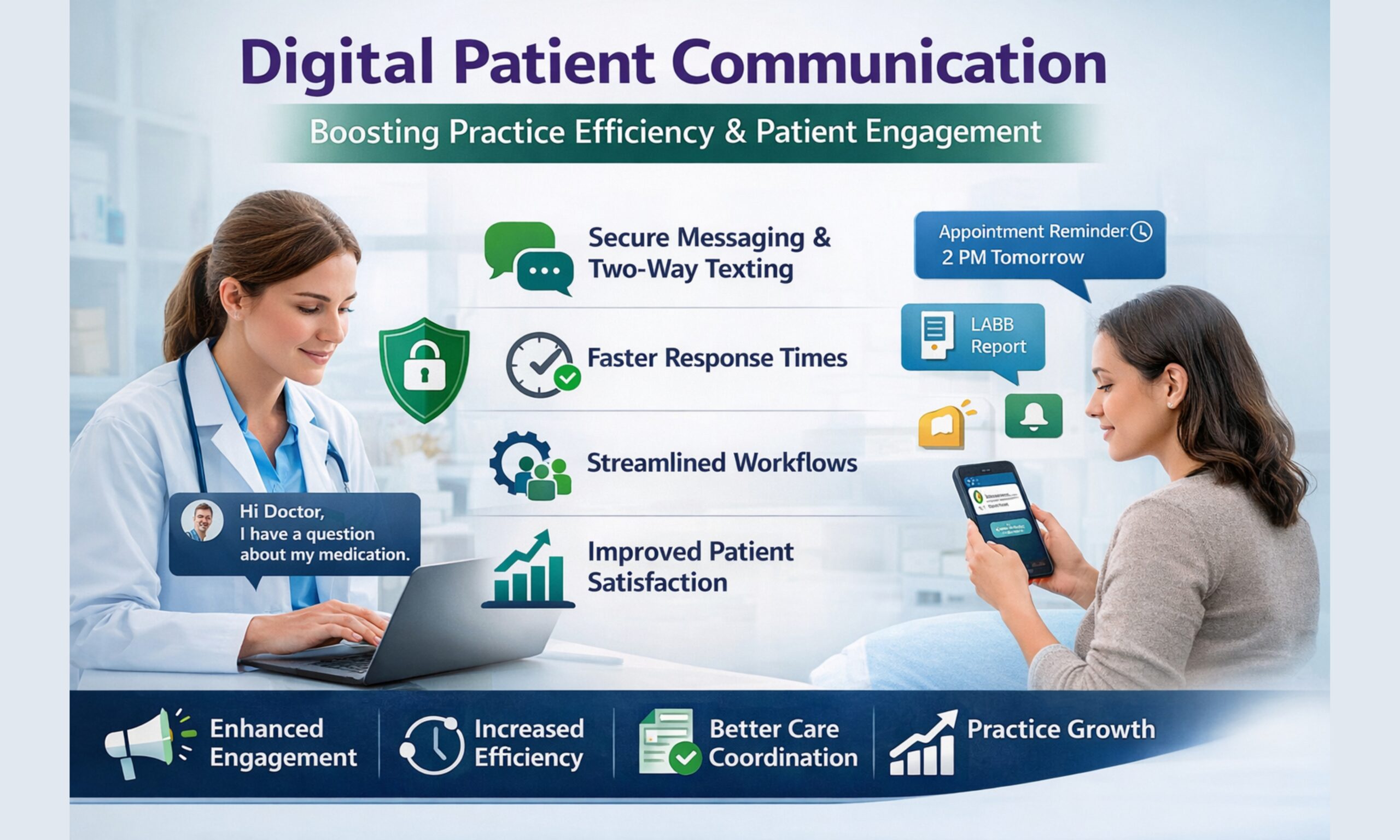
In an era where convenience defines patient expectations, digital patient communication has become a critical driver of healthcare efficiency and engagement. Patients want faster responses, easy access to information, and seamless communication with their care teams. At the same time, practices are under constant pressure to reduce administrative burden while maintaining high-quality care.
Modern digital communication tools are reshaping how practices operate - creating stronger patient relationships while improving clinical and operational performance.
Why Digital Patient Communication Is Essential Today
Traditional communication methods like phone calls and manual follow-ups often lead to delays, missed messages, and workflow disruptions. Digital patient communication solves these challenges by offering secure, scalable, and efficient channels for interaction.
With secure messaging and two-way communication tools, practices can respond faster, automate routine tasks, and improve overall patient experience without increasing workload.
Key Benefits of Digital Patient Communication for Healthcare Practices
1. Improved Patient Engagement and Satisfaction
Digital communication empowers patients to stay informed and involved in their care. Easy access to messages, reminders, and updates encourages patients to take a proactive role, leading to higher engagement and satisfaction.
2. Increased Practice Efficiency
By reducing phone volume and manual follow-ups, digital messaging streamlines daily operations. Administrative teams can manage multiple patient conversations at once, improving response time and workflow efficiency.
3. Faster Access to Health Information
Secure digital communication allows patients to receive lab results, appointment confirmations, and care instructions promptly. Faster access reduces confusion and improves adherence to care plans.
4. Scalable Communication Without Extra Staffing
Automated reminders and broadcast messaging help practices manage growing patient volumes without hiring additional staff. This scalability supports long-term operational growth.
5. Stronger Care Coordination and Documentation
Centralized digital conversations create a reliable communication trail, supporting better documentation and continuity of care. Care teams can quickly review patient interactions and respond with context.
6. Better Compliance and Quality Outcomes
Consistent patient outreach through secure digital channels supports quality initiatives, value-based care models, and regulatory compliance while improving measurable outcomes.
How Two-Way Messaging Enhances Patient Communication
One-way notifications are no longer enough. Two-way digital messaging allows patients to respond, ask questions, and clarify instructions in real time.
This interactive communication model:
-
Reduces delays in care
-
Helps close care gaps faster
-
Improves medication adherence
-
Enhances trust between patients and providers
Smart automation further improves efficiency by handling routine interactions while allowing care teams to step in when needed.
The Impact of Digital Communication on Patient Experience
When patients feel heard and supported, their overall experience improves. Digital communication removes barriers such as long wait times and unanswered calls, making healthcare more accessible and responsive.
This improved experience leads to:
-
Higher patient retention
-
Better online reviews
-
Increased trust and loyalty
The Future of Patient Communication in Healthcare
Digital patient communication is no longer optional—it’s a strategic necessity. Practices that invest in secure, intelligent communication tools position themselves for improved efficiency, stronger patient relationships, and sustainable growth.
At Revesolv, we focus on enabling smarter workflows and connected care through modern communication strategies that reduce complexity and enhance outcomes.
Final Thoughts
Efficient communication is the foundation of effective healthcare delivery. By adopting digital patient communication solutions, practices can simplify operations, strengthen patient engagement, and deliver care that meets today’s expectations.
As healthcare continues to evolve, connected and patient-centered communication will define success.
Share